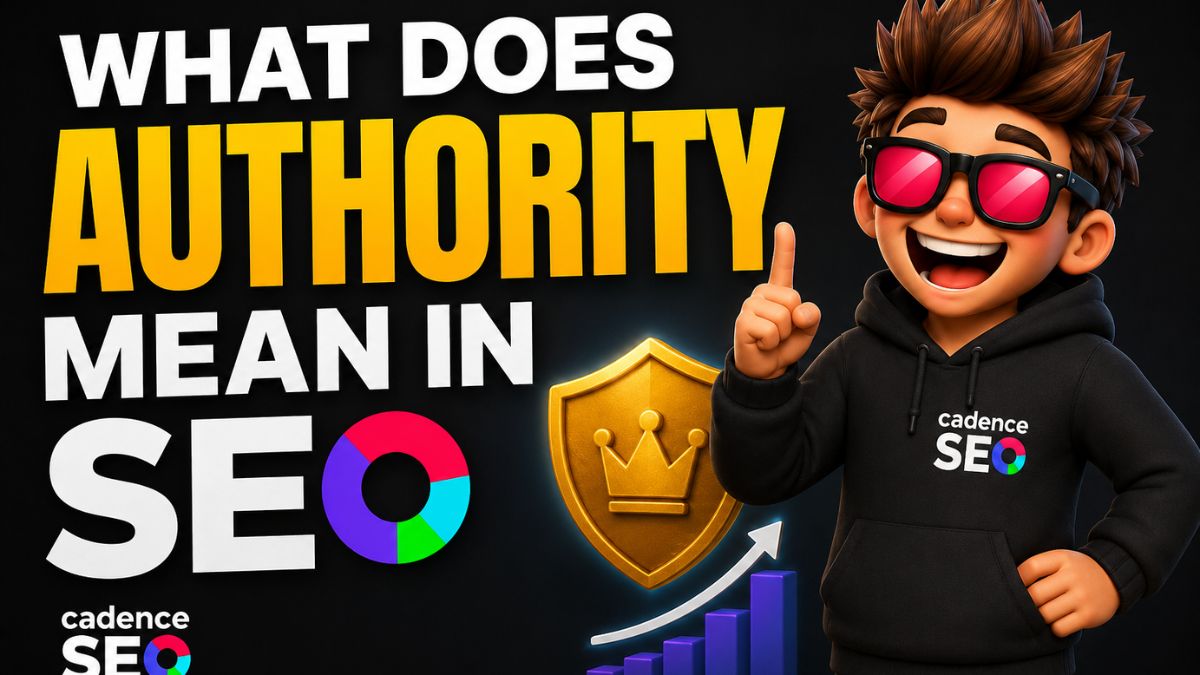
 SEO authority is one of the most important factors that search engines use to rank websites in search engine results. In the age of artificial intelligence and modern SEO, authority is no longer just about backlinks; it’s about the overall quality, relevance, and topical depth of your website. Search engines now use AI-powered algorithms to measure authority by analyzing user signals, content comprehensiveness, and semantic relevance in addition to traditional metrics. For Google and other search engines, SEO authority is established by being a trustworthy source of information that meets users’ needs and intent. The more authority your website or webpage has, the more likely Google is to recommend it to its users. To put a human spin on things, if your refrigerator breaks, do you ask your neighbor, who doesn’t know anything about appliance repairs, for help, or do you call your local handyperson who has experience with repairing refrigerators?
It’s more logical and effective to talk to the authority on the subject, the appliance repair person. This will also save you time and money, all while solving your problem. Google and other search engines want to show results with authority. Starting with E-A-T-T (Expertise, Authority, and Trustworthiness), authority is established by being an expert and trustworthy source both for search engines and for people. Modern SEO also incorporates concepts like Experience (E-E-A-T), user engagement metrics, and the use of AI to evaluate content quality and authenticity. SEO authority is a great example of the dual nature of how what is good for search engines is good for humans too.
Consider Google to be a Helpful Librarian. According to the Search Engine Journal, “Modern search engines use complex algorithms to find, reach and ascertain the topicality of webpages. They can then match those pages with search queries looking for the information they contain.” Today, those algorithms are heavily influenced by artificial intelligence and machine learning, which allow search engines to better understand user intent, context, and the true authority of a website’s content. To put it more simply, search engines are trying to find the most relevant match with the most SEO authority.
Back in the dark ages, pre-internet, people would go to libraries to do their research. While there were often dozens, if not hundreds, of relevant books, most likely people only needed three to five. Instead of manually searching through a hundred books to find the most applicable ones, they would ask the librarian for help. The librarian, with their more extensive knowledge, would be able to point people to the most relevant information.
SEO authority is one of the most important factors that search engines use to rank websites in search engine results. In the age of artificial intelligence and modern SEO, authority is no longer just about backlinks; it’s about the overall quality, relevance, and topical depth of your website. Search engines now use AI-powered algorithms to measure authority by analyzing user signals, content comprehensiveness, and semantic relevance in addition to traditional metrics. For Google and other search engines, SEO authority is established by being a trustworthy source of information that meets users’ needs and intent. The more authority your website or webpage has, the more likely Google is to recommend it to its users. To put a human spin on things, if your refrigerator breaks, do you ask your neighbor, who doesn’t know anything about appliance repairs, for help, or do you call your local handyperson who has experience with repairing refrigerators?
It’s more logical and effective to talk to the authority on the subject, the appliance repair person. This will also save you time and money, all while solving your problem. Google and other search engines want to show results with authority. Starting with E-A-T-T (Expertise, Authority, and Trustworthiness), authority is established by being an expert and trustworthy source both for search engines and for people. Modern SEO also incorporates concepts like Experience (E-E-A-T), user engagement metrics, and the use of AI to evaluate content quality and authenticity. SEO authority is a great example of the dual nature of how what is good for search engines is good for humans too.
Consider Google to be a Helpful Librarian. According to the Search Engine Journal, “Modern search engines use complex algorithms to find, reach and ascertain the topicality of webpages. They can then match those pages with search queries looking for the information they contain.” Today, those algorithms are heavily influenced by artificial intelligence and machine learning, which allow search engines to better understand user intent, context, and the true authority of a website’s content. To put it more simply, search engines are trying to find the most relevant match with the most SEO authority.
Back in the dark ages, pre-internet, people would go to libraries to do their research. While there were often dozens, if not hundreds, of relevant books, most likely people only needed three to five. Instead of manually searching through a hundred books to find the most applicable ones, they would ask the librarian for help. The librarian, with their more extensive knowledge, would be able to point people to the most relevant information.
SEO authority is one of the most important factors that search engines use to rank websites in search engine results. In the age of artificial intelligence and modern SEO, authority is no longer just about backlinks; it’s about the overall quality, relevance, and topical depth of your website. Search engines now use AI-powered algorithms to measure authority by analyzing user signals, content comprehensiveness, and semantic relevance in addition to traditional metrics. For Google and other search engines, SEO authority is established by being a trustworthy source of information that meets users’ needs and intent. The more authority your website or webpage has, the more likely Google is to recommend it to its users. To put a human spin on things, if your refrigerator breaks, do you ask your neighbor, who doesn’t know anything about appliance repairs, for help, or do you call your local handyperson who has experience with repairing refrigerators?
It’s more logical and effective to talk to the authority on the subject, the appliance repair person. This will also save you time and money, all while solving your problem. Google and other search engines want to show results with authority. Starting with E-A-T-T (Expertise, Authority, and Trustworthiness), authority is established by being an expert and trustworthy source both for search engines and for people. Modern SEO also incorporates concepts like Experience (E-E-A-T), user engagement metrics, and the use of AI to evaluate content quality and authenticity. SEO authority is a great example of the dual nature of how what is good for search engines is good for humans too.
Consider Google to be a Helpful Librarian. According to the Search Engine Journal, “Modern search engines use complex algorithms to find, reach and ascertain the topicality of webpages. They can then match those pages with search queries looking for the information they contain.” Today, those algorithms are heavily influenced by artificial intelligence and machine learning, which allow search engines to better understand user intent, context, and the true authority of a website’s content. To put it more simply, search engines are trying to find the most relevant match with the most SEO authority.
Back in the dark ages, pre-internet, people would go to libraries to do their research. While there were often dozens, if not hundreds, of relevant books, most likely people only needed three to five. Instead of manually searching through a hundred books to find the most applicable ones, they would ask the librarian for help. The librarian, with their more extensive knowledge, would be able to point people to the most relevant information.
SEO authority is one of the most important factors that search engines use to rank websites in search engine results. In the age of artificial intelligence and modern SEO, authority is no longer just about backlinks; it’s about the overall quality, relevance, and topical depth of your website. Search engines now use AI-powered algorithms to measure authority by analyzing user signals, content comprehensiveness, and semantic relevance in addition to traditional metrics. For Google and other search engines, SEO authority is established by being a trustworthy source of information that meets users’ needs and intent. The more authority your website or webpage has, the more likely Google is to recommend it to its users. To put a human spin on things, if your refrigerator breaks, do you ask your neighbor, who doesn’t know anything about appliance repairs, for help, or do you call your local handyperson who has experience with repairing refrigerators?
It’s more logical and effective to talk to the authority on the subject, the appliance repair person. This will also save you time and money, all while solving your problem. Google and other search engines want to show results with authority. Starting with E-A-T-T (Expertise, Authority, and Trustworthiness), authority is established by being an expert and trustworthy source both for search engines and for people. Modern SEO also incorporates concepts like Experience (E-E-A-T), user engagement metrics, and the use of AI to evaluate content quality and authenticity. SEO authority is a great example of the dual nature of how what is good for search engines is good for humans too.
Consider Google to be a Helpful Librarian. According to the Search Engine Journal, “Modern search engines use complex algorithms to find, reach and ascertain the topicality of webpages. They can then match those pages with search queries looking for the information they contain.” Today, those algorithms are heavily influenced by artificial intelligence and machine learning, which allow search engines to better understand user intent, context, and the true authority of a website’s content. To put it more simply, search engines are trying to find the most relevant match with the most SEO authority.
Back in the dark ages, pre-internet, people would go to libraries to do their research. While there were often dozens, if not hundreds, of relevant books, most likely people only needed three to five. Instead of manually searching through a hundred books to find the most applicable ones, they would ask the librarian for help. The librarian, with their more extensive knowledge, would be able to point people to the most relevant information.