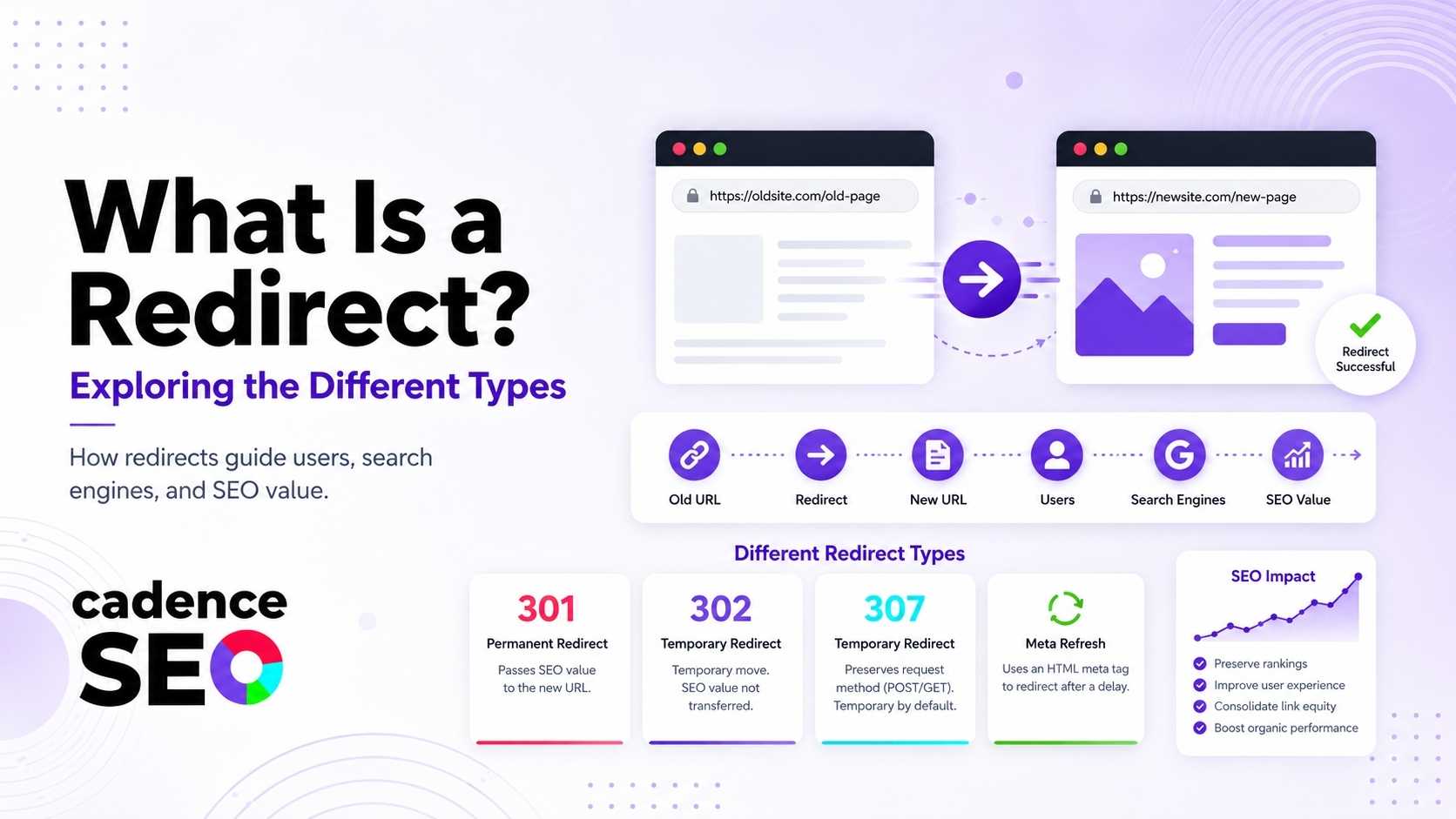
Redirects are a fundamental tool in the SEO toolkit, playing a critical role in maintaining the integrity and usability of websites. At its core, a redirect is a method for sending both users and search engines to a different URL than the one originally requested. Whether you’re restructuring your site, merging content, or recovering from a mistake, understanding redirects can help you maintain your website’s performance and search engine rankings.
Understanding Redirects
Redirects are instructions that tell browsers and search engines that a page has been moved to a new location. When implemented correctly, redirects ensure a seamless user experience and preserve the SEO value of the original page. However, improper use of redirects can lead to issues such as broken links, slower site speed, and loss of page authority, which can harm your SEO efforts.
A redirect’s primary function is to notify search engines and users about changes in a website’s structure. It could be as simple as changing a single URL or as complex as migrating an entire site to a new domain. Redirects help manage these transitions smoothly, ensuring visitors and search engines are in the right place.
What are the 6 Types of Redirects?
Redirects come in various forms, each with specific use cases and SEO implications. Redirects fall under two main categories: permanent and temporary. Here’s a breakdown of the most common types:
301 Redirects
A 301 redirect is a permanent redirect that passes 100% of the link equity (ranking power) to the redirected page. This type of redirect is ideal when a page has permanently moved to a new location. Search engines will de-index the old page and transfer its SEO value to the new one, making it a powerful tool for maintaining search rankings during URL changes.
302 Redirects
A 302 redirect is a temporary redirect. It indicates that the page has been moved temporarily and will return to its original URL. This type is useful when you’re updating or redesigning a page and want to maintain its SEO value during the interim. Like 301 redirects, 302 redirects pass the same level of link equity; however, 301s may offer a stronger canonicalization signal to Google spiders. A canonical tag tells search engines that the content it points to should be the version displayed on search engine results pages (SERPs).
307 Redirects
A 307 redirect is similar to a 302 redirect but is used specifically for HTTP/1.1. It indicates a temporary move and ensures that the request method remains the same, whether POST or GET. With a GET request, a user is attempting to simply view the page. POST requests are a user’s attempts to send data, such as a form submission. This type of redirect is less commonly used but important in specific scenarios where maintaining the request method is critical.
308 Redirects
A 308 redirect is the permanent version of a 307 redirect. It indicates that the resource has been permanently moved to a new URL and that the method used to access it should not change, as with a 307 redirect. This means that if the original request was a POST, the new request will also be a POST. It’s particularly useful for ensuring the continuity of request methods during permanent moves.
Meta Refresh Redirects
Meta refresh redirects are executed at the browser level rather than the server level, typically with a 5-second countdown before redirecting the user. They are less ideal for SEO as they can cause a slight delay and may not pass as much link equity as server-side redirects. However, they can be useful for quickly redirecting users from outdated content.
JavaScript Redirects
JavaScript redirects are client-side (page-level) redirects executed using JavaScript code on the page. While they can be useful in some situations, they are generally not recommended for SEO as search engines may not always process them correctly. Server-side redirects are usually more reliable and efficient. JavaScript may pass on 100% link equity, but it isn’t guaranteed.
When is a Redirect Necessary?
Redirects are necessary in various situations to ensure a smooth user experience and maintain SEO integrity. Here are some common scenarios:
Website Restructuring
When reorganizing your website’s structure, such as changing URLs or moving content to different sections, redirects ensure that users and search engines can still find your content. This prevents broken links and maintains the SEO value of your pages.
Domain Changes
If you’re changing your website’s domain name, using 301 redirects is essential. This ensures that the traffic and SEO value from the old domain are transferred to the new one, minimizing the impact on your search rankings.
Content Merging
When merging similar content or consolidating pages to improve user experience and SEO, redirects help guide visitors from the old pages to the new, combined content. They prevent duplicate content issues and ensure a cohesive user journey.
Page Deletion
If you need to permanently delete a page, implementing a 301 redirect to a relevant page helps maintain your website’s structure and SEO value. Redirecting users to related content can enhance their experience and keep them engaged with your site.
Temporary Downtime
During temporary downtime or maintenance, a 302 or 307 redirect can inform users and search engines that the page will return soon. It helps retain your SEO rankings and assures users that the page is temporarily unavailable.
Fixing Broken Links
Broken links can negatively impact user experience and SEO. Redirects help manage broken links by guiding users to the correct content, preventing dead ends on your website.
Not Sure When to Use a Redirect? CadenceSEO Has Your Back!
301s, 307s, meta refresh redirects—deciding which type to implement for your website’s specific needs can be overwhelming. CadenceSEO is a full-service digital marketing agency and consultancy specializing in all things SEO. Our team of SEO nerds can guide you through redirects and ensure your site maintains optimal link equity during critical updates. Ready to redirect? Contact us for a Free Video Audit today!